8 San Da Training Benefits That Matter
What is Chinese Kickboxing and why it will benefit you
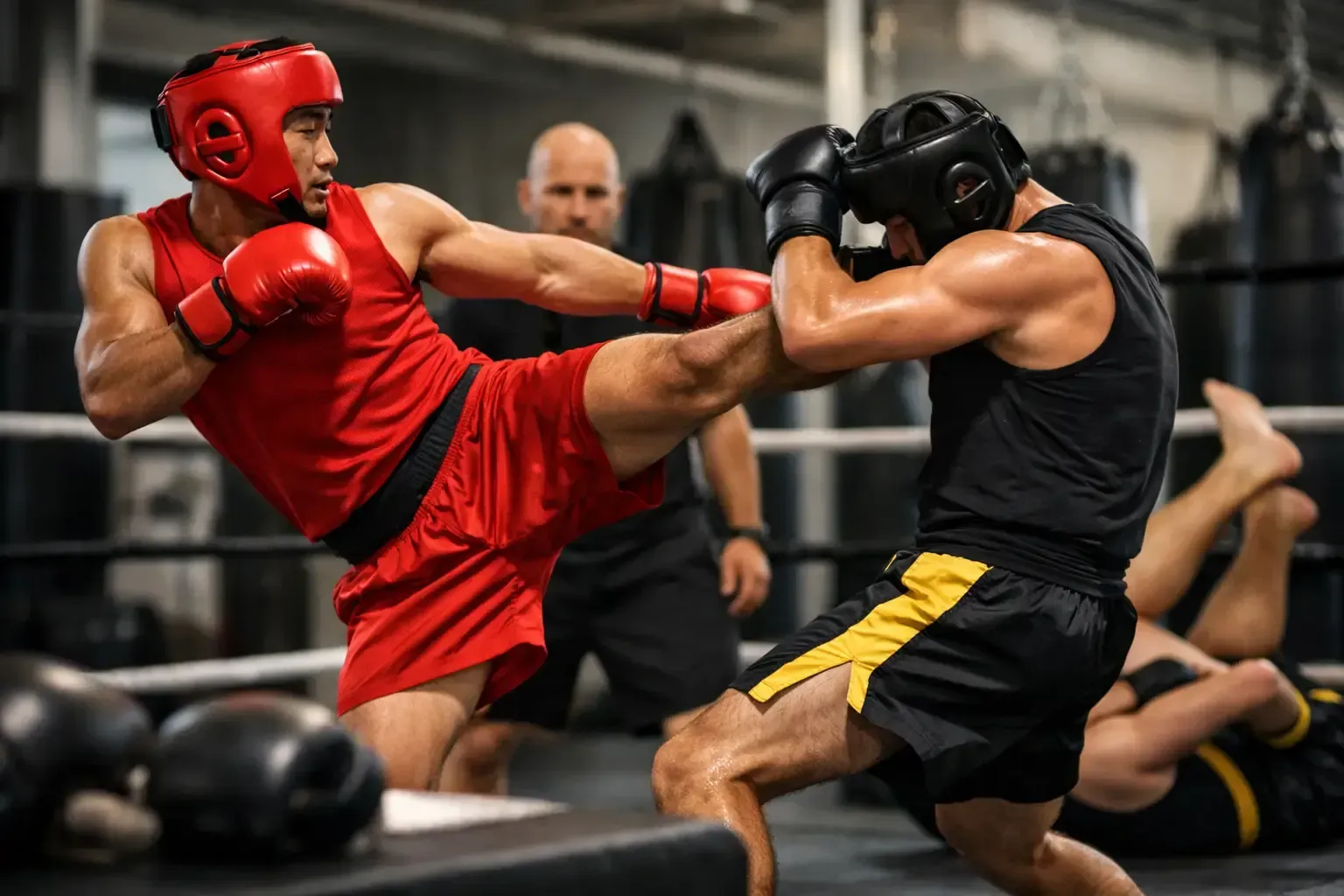
A lot of people walk into their first San Da class expecting a hard workout. They usually get that in the first few minutes. What surprises them is how quickly the training starts changing more than just conditioning. The real san da training benefits show up in your stamina, your focus, your confidence, and the way you carry yourself outside the gym.
San Da is practical by design. It blends striking, footwork, defensive movement, and controlled partner work into training that feels purposeful from day one. For teens and adults who are tired of repetitive gym routines, or parents looking for martial arts that build discipline as much as athleticism, that matters.
What makes San Da different
San Da, sometimes called Chinese kickboxing, is a combat sport rooted in traditional martial arts but trained in a direct, modern way. It includes punches, kicks, movement, timing, and in many settings, throws or off-balancing techniques. That gives it a distinct feel compared with workouts built around only punching bags or cardio circuits.
The benefit is not just variety. It is that every part of class has a reason behind it. You are not throwing random combinations to burn calories. You are learning distance, control, reaction, and body mechanics while getting stronger and fitter. That combination keeps people engaged longer, especially beginners who want exercise with structure.
1. San da training benefits your conditioning fast
If your current workout leaves you bored, San Da changes that quickly. Classes challenge your cardiovascular system,
muscular endurance, coordination, and recovery all at once. You move in bursts, reset, and go again. That kind of interval-based effort builds real-world conditioning, not just the ability to survive on a treadmill.
Many students notice better stamina within a few weeks. Climbing stairs feels easier. Energy levels improve. You recover faster between rounds of effort, whether that means training, running for the train, or getting through a long workday without feeling drained.
There is a trade-off, though. San Da conditioning is demanding, and it can feel humbling at first. That is not a bad thing. In a structured class, you build capacity safely over time instead of pretending you are in shape and staying stuck.
2. It develops practical self-defense skills
People often say they want self-defense, but what they usually mean is they want to feel less helpless. San Da helps with that because it teaches timing, distance, awareness, balance, and controlled reactions under pressure. Those skills matter more than memorizing flashy techniques.
A good class does not just teach how to strike. It teaches when to move, how to protect yourself, how to stay composed, and how to respond without panicking. That is useful for adults navigating city life and for teens who need confidence without aggression.
Of course, no class can promise invincibility. Self-defense always depends on the situation, your awareness, and your ability to make smart decisions. But training gives you a stronger base than wishful thinking.
3. It builds confidence without feeding ego
This is one of the most overlooked benefits of martial arts. Real confidence is not loud. It comes from knowing you can learn hard things, stay calm under pressure, and improve with consistent effort.
San Da has a way of revealing your habits. Maybe you tense up, lose focus, or give up too soon when you get tired. Under the guidance of a strong instructor, those moments become opportunities to grow instead of reasons to quit. As students improve, they usually become more grounded, not more reckless.
That matters in the right training environment. Confidence built in a disciplined school is different from confidence built around proving yourself. It is steadier. It shows up in body language, decision-making, and resilience.
4. San da training benefits your focus and discipline
There is no way to coast through a San Da class while mentally checked out. You have to listen, adjust, remember combinations, manage your breathing, and stay aware of your partner or target. That kind of training pulls your attention into the present.
For busy adults, that can be a relief. Phones, work stress, and constant distractions make it hard to fully engage with anything. Martial arts gives you a clear hour where your mind has a job to do. Over time, that carries into daily life. Students often feel sharper, more organized, and more consistent because they are practicing discipline in a real setting, not just talking about it.
For teens, the structure can be especially valuable. Progress comes from repetition, respect, and accountability. Those are life skills, not just martial arts skills.
5. It strengthens the whole body
San Da is a full-body training method. Your legs generate power. Your core helps you rotate, stabilize, and absorb movement. Your shoulders and back support punching endurance and guard position. Even your footwork places demands on muscles that standard gym machines often miss.
That is one reason the training feels athletic instead of isolated. You are not just working one muscle group at a time. You are learning to connect the body so it moves with more speed, balance, and control.
This does not mean everyone needs to train at the same intensity. Beginners, returning exercisers, and experienced athletes all benefit differently. One person may need to improve mobility and base conditioning. Another may be ready for sharper technique and higher pace. Good coaching respects that.
6. It teaches composure under pressure
One of the clearest san da training benefits is emotional control. When a drill speeds up, when you miss a combination, or when a partner puts light pressure on you, your first reaction matters. Do you freeze, rush, or lose your breathing? Training exposes that in a safe environment.
That is valuable because pressure is part of life. It shows up in conflict, deadlines, difficult conversations, and unexpected setbacks. Martial arts cannot remove stress, but it can improve how you respond to it.
Students who stay with the process often become calmer in challenging situations. They learn to reset, listen, and act with intention. That is a serious benefit, especially for people who want training to improve the whole person, not just physical performance.
7. It keeps motivation higher than standard workouts
A lot of fitness plans fail for one simple reason. They are boring. People do not stop because movement stopped working. They stop because the process feels empty.
San Da gives you something to work toward every class. A cleaner jab. Better footwork. Stronger defense. More confidence during partner drills. That steady sense of progress keeps motivation alive in a way generic workouts often do not.
This is especially helpful for adults who struggle with consistency. When training has a skill component, showing up feels rewarding even before dramatic physical results appear. You are not just exercising. You are developing ability.
8. It creates community and accountability
The best training environments are challenging, but they are also supportive. That balance matters. People improve faster when they feel guided, respected, and pushed in the right way.
San Da classes create a natural sense of community because students train with one another, learn timing together, and see each other progress over time. You are not alone with your headphones, guessing what to do next. You are part of a structured class where effort is shared and improvement is visible.
For many people, that is the missing piece. Accountability is easier when coaches know your name and training partners expect to see you. In a city as busy as New York, that kind of consistent environment can make all the difference.
Who benefits most from San Da training?
San Da works well for beginners, but also for experienced students who want practical striking and better conditioning. Adults who feel stuck in gym routines often respond well to it because classes are active, skill-based, and mentally engaging. Teens benefit from the structure, confidence building, and discipline. It can also be a strong fit for people who want self-defense training without stepping into an ego-driven fight culture.
That said, the right program matters. If a school pushes intensity without teaching control, beginners may feel overwhelmed. If classes are too casual, students may not make real progress. The best experience comes from instructor-led training that balances safety, challenge, and steady development.
At NY Best Kickboxing, that balance is a big part of what makes martial arts approachable for students who want real training in a supportive setting.
Why the long-term benefits matter most
The first benefits people notice are usually physical. Better stamina, weight loss, sharper coordination. Those are real, and they matter. But the benefits that last tend to be deeper than that.
San Da teaches you how to stay disciplined when you are tired, how to improve without needing instant results, and how to carry confidence with humility. It gives you a training method that builds fitness and character at the same time.
If you want a workout, there are plenty of options. If you want training that challenges your body, sharpens your mind, and helps you grow with purpose, San Da is worth your attention. The best part is that you do not have to be advanced to start. You just have to be ready to train with focus and keep showing up.