Best Martial Art for Fitness?
Wondering about the best martial art for fitness? Compare kickboxing, Muay Thai, and Kung Fu to find the right fit for your body and goals.
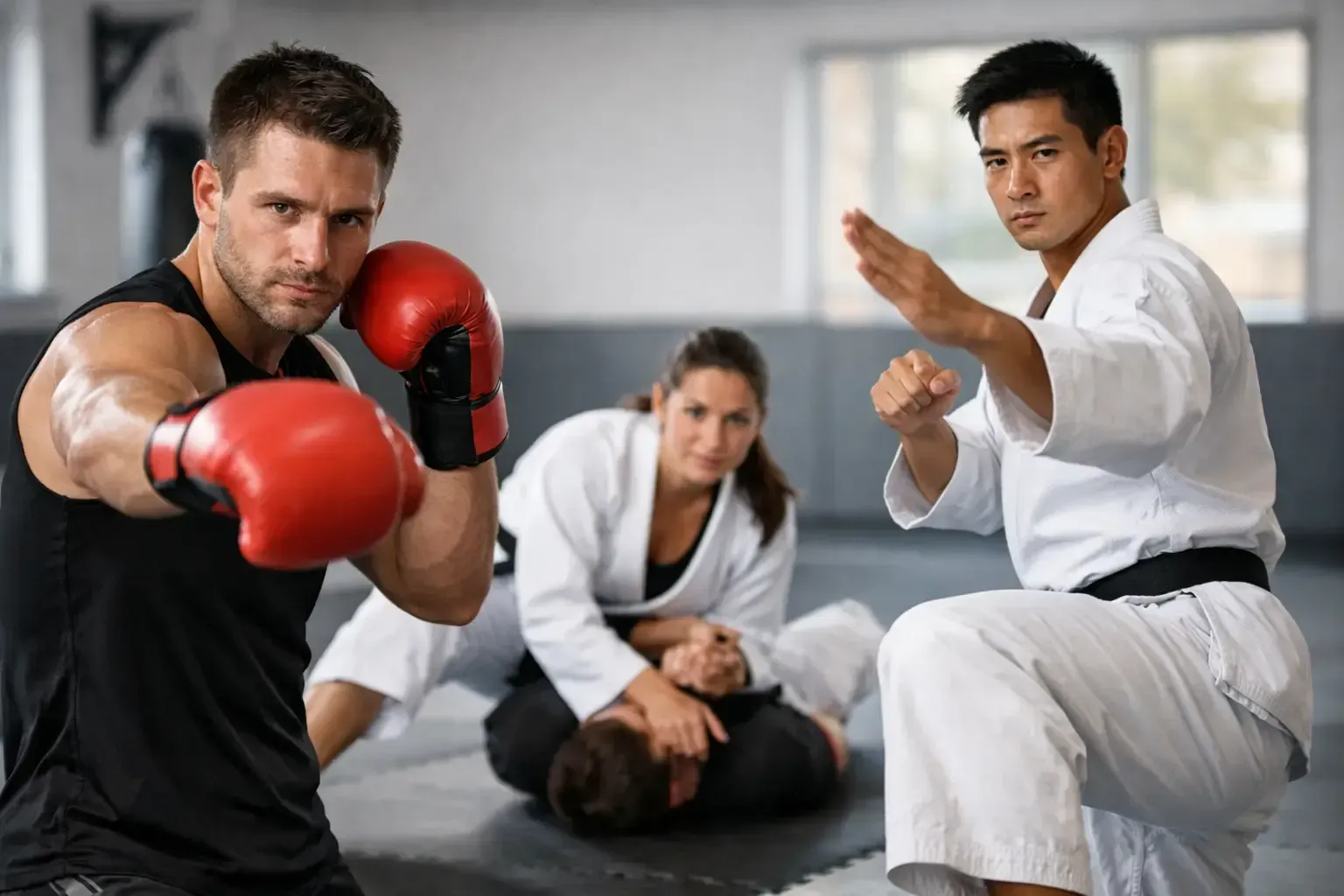
If your workouts keep turning into skipped gym days, the question usually is not whether you need exercise. It is whether you need a better reason to show up. For many people, the best martial art for fitness is the one that gives training a purpose - stronger conditioning, sharper focus, practical skill, and real accountability in every class.
That answer may sound simple, but it matters. People often ask for one perfect style, as if there is a universal winner. In practice, the best choice depends on what kind of fitness you want, how you like to train, and whether you need structure to stay consistent. Martial arts can build endurance, strength, coordination, mobility, and mental toughness, but different systems emphasize those benefits in different ways.
What makes the best martial art for fitness?
A martial art is good for fitness when it does more than just make you sweat. It should challenge your whole body, improve movement quality, and keep you mentally engaged enough that you want to come back next week. That last part is more important than most people realize.
The best programs combine cardio, muscular endurance, balance, coordination, and core strength. They also give you a clear path to progress. When classes are structured and instructor-led, you are not left guessing what to do. You train with intention, and that usually leads to better consistency than a standard gym routine.
There is also a mindset piece. Good martial arts training builds discipline and self-control along with physical conditioning. For adults, that often means less boredom and more motivation. For teens, it can mean learning how to push through discomfort in a healthy, guided environment.
Kickboxing: one of the strongest answers for total-body fitness
If your main goal is to get in shape, kickboxing is one of the strongest contenders for the best martial art for fitness. It is accessible for beginners, highly effective for calorie burn, and easy to scale as your conditioning improves.
A solid kickboxing class trains your legs, core, shoulders, back, and cardiovascular system at the same time. Punches and kicks build power and coordination, while pad work, bag rounds, footwork, and conditioning drills keep the heart rate high. You are not just grinding through random exercises. You are learning how to move with control.
Kickboxing also tends to work well for people who get bored easily. The variety helps. One round may focus on technique, the next on combinations, the next on speed or conditioning. That mix keeps training mentally active, which is a major reason people stay with it.
The trade-off is that quality matters. Poorly run kickboxing classes can become all intensity and no instruction. If the coaching is not structured, beginners may throw sloppy strikes, tire out quickly, or feel lost. The right environment should push you while still teaching form, rhythm, and discipline.
Muay Thai: excellent for conditioning, grit, and power
Muay Thai is often recommended for people who want serious conditioning with practical striking skills. It uses punches, kicks, knees, and elbows, which creates a demanding full-body workout. Done well, it improves stamina, lower-body power, rotational strength, and mental toughness.
Compared with general fitness kickboxing, Muay Thai can feel more technical and physically intense. The stance, timing, and striking mechanics take time to learn, but that learning curve is part of the benefit. You are not just exercising. You are developing skill under pressure.
For some beginners, that extra depth is motivating. For others, it can feel intimidating if the culture is too fight-focused. That is why the training environment matters as much as the art itself. In a supportive school, Muay Thai becomes an incredible tool for fitness and confidence. In an ego-driven room, some people quit before they ever get comfortable.
Kung Fu: underrated for coordination, mobility, and body control
Kung Fu is not always the first answer people expect when they ask about fitness, but it deserves more respect in this conversation. Depending on the style and how it is taught, Kung Fu can develop flexibility, balance, coordination, posture, lower-body endurance, and body awareness in ways many modern workouts miss.
This makes it especially valuable for people who want athletic development, not just exhaustion. Training often demands precision, stance work, controlled movement, and attention to detail. That can strengthen the legs and core while also improving how your body moves as a whole.
The trade-off is that Kung Fu may not always deliver the same nonstop cardio pace as a high-energy kickboxing session. If your only measure of a workout is how drenched you are after class, you might underestimate its fitness value. But fitness is not just about fatigue. Better mobility, stability, and control can make your body stronger and more resilient over time.
The real answer: the best martial art for fitness depends on your goal
If you want high-energy classes that help with weight loss, stamina, and total-body conditioning, kickboxing is often the best starting point. If you want a more demanding striking system with deep technical development, Muay Thai may be the better fit. If you want coordination, mobility, body control, and disciplined movement, Kung Fu can be a powerful choice.
This is why a one-size-fits-all answer usually falls apart. Someone recovering from years of inactivity may need a supportive beginner-friendly class, not the hardest room in town. A former athlete may want intensity and technical challenge. A busy professional may need training that is structured enough to remove decision fatigue. The right fit is the one that keeps you progressing without burning you out.
What beginners should look for in a school
Most people do not fail at martial arts because they picked the wrong style. They stop because the environment was not right for them. That is an important distinction.
A good school should feel disciplined but approachable. Instructors should give clear guidance, correct technique, and create a culture of respect. You should feel challenged, not judged. Especially for beginners, that kind of structure makes a major difference in both fitness results and confidence.
Look for classes that balance conditioning with instruction. If everything is pure intensity, you may get tired without learning much. If everything is slow and overly technical, you may not get the fitness benefit you want. The best training combines both.
This matters even more for teens and families. Martial arts should build character along with physical ability. Respect, consistency, humility, and self-control are not extras. They are part of what makes training valuable in the first place.
Why martial arts often work better than the gym
A lot of people know how to exercise. They just do not stick with it. Martial arts solves that by replacing passive workouts with active learning. Instead of repeating the same machine circuit, you are working toward real improvement.
That sense of progress changes everything. You notice your combinations getting cleaner, your stamina lasting longer, your posture improving, your confidence rising. Fitness becomes a byproduct of training with purpose.
For people in New York City who want more than another anonymous workout, that structure can be the difference between starting and staying with it. At NY Best Kickboxing, that means guided training that pushes students physically while helping them grow in discipline, confidence, and control.
If you are still deciding on the best martial art for fitness, start with the question that matters most: what kind of training will keep you showing up with focus and effort? The strongest program is the one that makes you better, not just more tired.
FILL OUT THIS FORM TO GET MORE INFORMATION AND SPECIAL OFFERS