Muay Thai vs Kung Fu: Which Fits You?
Kung Fu, Muay Thai, and San Da
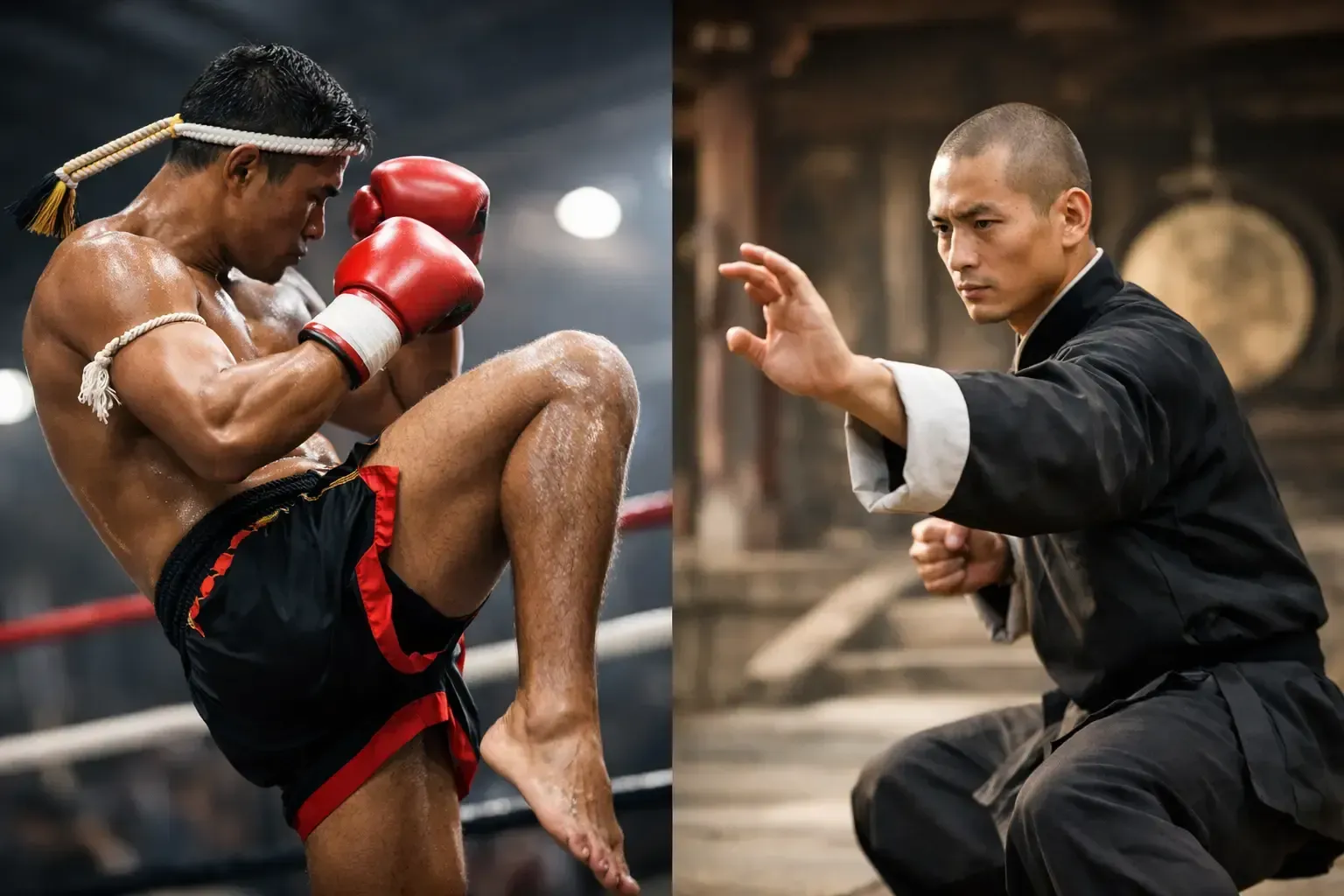
Some people know they want martial arts training, but get stuck on one question right away: muay thai vs kung fu. On the surface, both can build strength, confidence, and real skill. In practice, they feel very different, and the better choice usually comes down to your goals, your personality, and how you want to grow through training.
If you are choosing between the two, it helps to stop thinking about which style is better in a general sense. A better question is which one will keep you showing up, working hard, and improving with consistency. That is where real results come from.
Muay Thai vs Kung Fu: The Core Difference
Muay Thai is direct, conditioning-heavy, and built around practical striking. It uses punches, kicks, knees, and elbows, often called the art of eight limbs. Training tends to be structured around pad work, bag work, partner drills, footwork, defense, and physical conditioning. You feel the workout quickly, and you usually understand what you are working on from day one.
Kung Fu is broader. It is not one single style but a family of systems with different methods, philosophies, and movement patterns. Some branches focus on striking, some on forms, some on self-defense applications, and some on traditional weapons or deeper technical study. Kung Fu often attracts people who want martial arts to be both physical and mental - not just a workout, but a disciplined practice.
That does not mean one is practical and the other is not. It means the training emphasis is different. Muay Thai usually gives beginners a very clear path to usable offense and defense. Kung Fu often gives students a wider martial arts experience that can include technique, coordination, control, and tradition in a stronger balance.
Which Style Is Better for Fitness?
If your main goal is to get in shape fast, Muay Thai usually has the edge. The training is intense, repetitive in a good way, and demanding on the whole body. Kicks challenge balance and hip mobility. Punch combinations raise your heart rate. Knees and elbows develop timing and power. Add in rounds on pads or bags, and you have a workout that feels athletic and purposeful.
For busy adults who are tired of treadmill routines or gym programs that do not hold their attention, this matters. Muay Thai often keeps people engaged because every class has a clear structure and a visible sense of progress. You are not just burning calories. You are building skill while you train.
Kung Fu can absolutely improve fitness too, but the path may feel different. Depending on the program, you might spend more time on stance work, technical drills, coordination, controlled movement, and body awareness. That can build strength, flexibility, posture, and endurance in a way that is less obvious at first but very valuable over time.
So if you want a high-energy training style that feels immediately intense, Muay Thai may be the stronger fit. If you want fitness combined with technical discipline and more varied movement, Kung Fu may suit you better.
Muay Thai vs Kung Fu for Self-Defense
This is where people often want a simple winner, but the honest answer is more nuanced.
Muay Thai is widely respected for practical striking. It teaches you how to generate power, manage distance, defend under pressure, and stay composed while exchanging. For self-defense, those are meaningful advantages. The movements are efficient, and the training often includes repetitive drilling that helps students react with more confidence.
Kung Fu can also support self-defense, especially when taught with application in mind. Good instruction can sharpen timing, awareness, balance, coordination, and control. Some systems include close-range techniques, redirection, and situational responses that are highly useful. The challenge is that Kung Fu varies a lot from school to school, so the real-world value depends heavily on how the program is taught.
For a beginner focused mostly on straightforward self-defense, Muay Thai often feels easier to grasp. For someone who wants self-defense as part of a broader martial arts journey, Kung Fu can be deeply rewarding. It depends on whether you want immediate simplicity or a wider technical framework.
Training Experience: What Class Feels Like
The feeling of class matters more than many people expect.
Muay Thai classes often have a strong pace. You warm up, drill strikes, work combinations, sharpen defense, and push conditioning. There is a rhythm to the training that feels focused and physically honest. You know when you worked hard, and you leave class with that clear sense of effort that many adults want after a long day.
Kung Fu classes can feel more layered. You may work on stance, mechanics, forms, partner practice, striking drills, and traditional discipline all in one session. That variety can be appealing, especially for students who want martial arts to develop concentration and control along with fitness. It can also be a great fit for younger students who benefit from structure, listening skills, and body awareness.
Neither approach is better for everyone. Some students thrive when training is direct and intense. Others stay motivated when there is more technical variety and a stronger connection to traditional martial arts culture.
Which One Is Better for Beginners?
Beginners often do well in either style when the coaching is structured and supportive. That point matters because a great program makes martial arts accessible, while a poor one makes it confusing or intimidating.
Muay Thai is often easier for beginners to understand quickly. The techniques are clear, the goals of each drill are usually obvious, and progress can feel measurable. If you are someone who likes straightforward instruction and immediate feedback, that is a strong advantage.
Kung Fu may take a little more patience at the start, especially if the class includes formal movement patterns or concepts that build over time. But for many students, that is part of the appeal. It teaches discipline in a deeper way. You are not only learning to hit. You are learning how to move with purpose, pay attention to detail, and develop control.
For kids and teens, this difference can matter a lot. A child who needs focus, patience, and structure may benefit greatly from Kung Fu training. A teen or adult who wants to build confidence through demanding physical practice may connect faster with Muay Thai. Still, personality matters more than stereotypes.
Mindset and Personal Growth
The best martial arts training changes more than your body.
Muay Thai tends to build grit. It teaches you to stay composed when you are tired, stay disciplined through repetition, and trust your training. There is something powerful about learning to handle intensity in a controlled setting. That often carries into daily life - better stress management, stronger confidence, and more resilience.
Kung Fu often develops patience and self-control in a different way. It asks for attention, humility, and respect for process. Progress can feel less rushed, which teaches students to value consistency over quick wins. For many people, especially those looking for more than just a workout, that becomes one of the biggest benefits.
At a school like NY Best Kickboxing, this distinction matters because the right martial art should support the whole person. Students do better when training builds discipline, confidence, and inner strength alongside technique.
How to Choose Between Muay Thai and Kung Fu
If you are still weighing muay thai vs kung fu, think about what you want your classes to do for you after the first few weeks wear off.
If you want intense conditioning, straightforward striking, and a practical path toward self-defense, Muay Thai is often the better match. It is especially appealing for adults who want a serious workout with real skill behind it.
If you want a more traditional martial arts experience with technical depth, structured discipline, and a wider focus on movement and control, Kung Fu may be the better choice. It can be a strong fit for students who value the mental side of training as much as the physical side.
You should also be honest about what will keep you consistent. The most effective martial art is the one you respect enough to practice regularly. A style can look impressive from the outside and still be wrong for your goals or temperament.
A good instructor will help you make that decision with clarity, not pressure. They will explain the training, set realistic expectations, and create an environment where beginners can improve safely. That matters far more than flashy debates about which style wins on paper.
The right training should challenge you, steady you, and give you a reason to come back. When that happens, the question stops being which art is better, and becomes which one helps you become stronger in every sense.